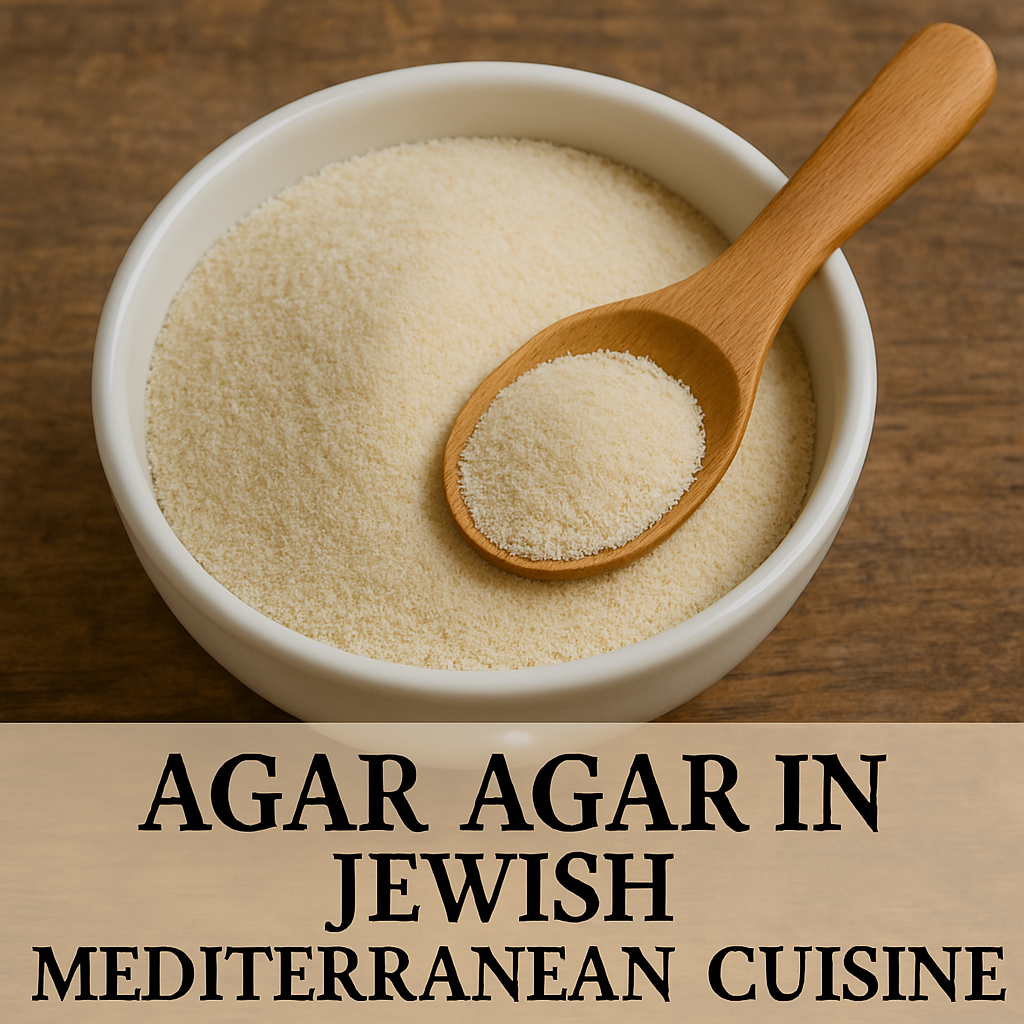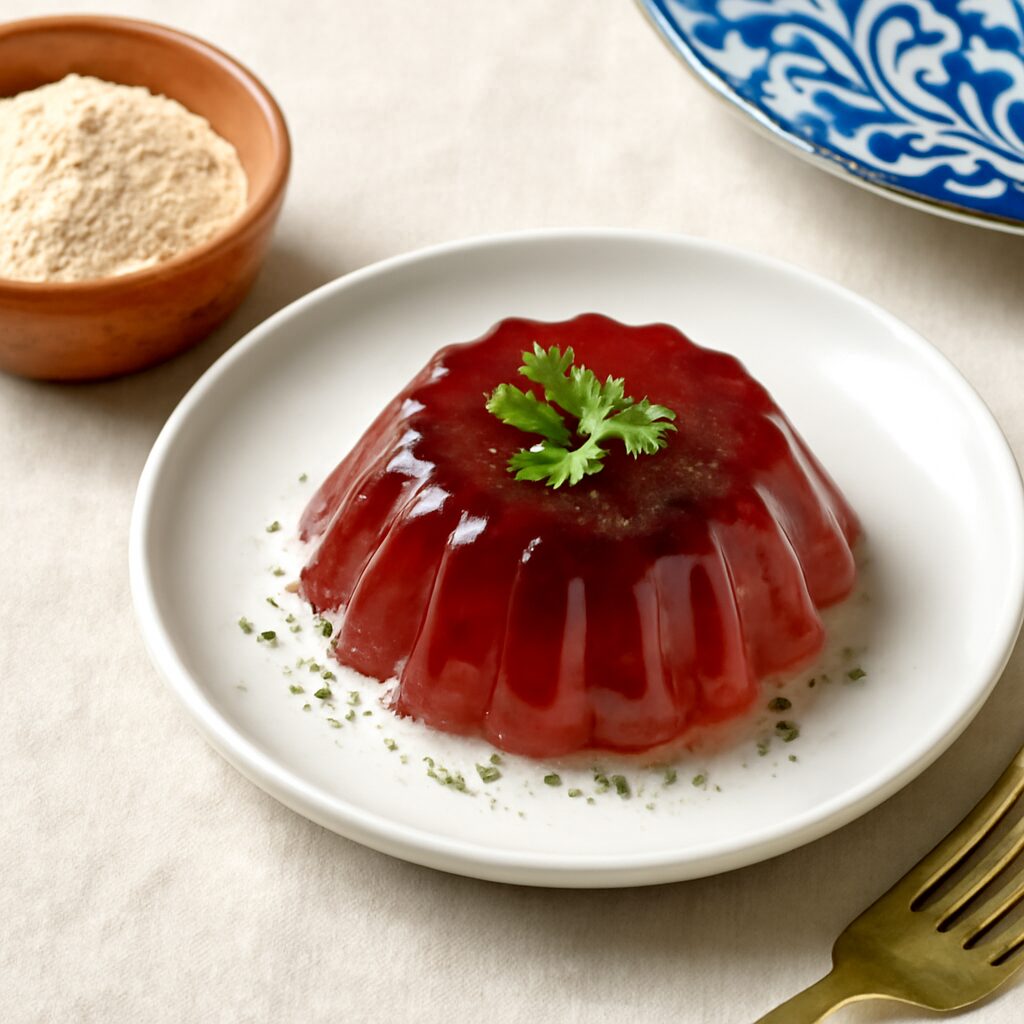
Agar-agar, a plant-based gelatin derived from seaweed, has found its way into Jewish Mediterranean cuisine as a versatile thickening agent. While not traditionally Jewish, its use aligns with kosher dietary laws, making it a popular choice in dairy and pareve dishes. Its neutral taste and strong gelling properties allow it to adapt to both sweet and savory recipes.
In 2025’s food trends, one ancient ingredient is making a remarkable comeback in Jewish kitchens around the world: agar-agar. This plant-based gelatin derived from red algae has captured the attention of chefs, home cooks, and food sustainability advocates alike.
It represents one of the most fascinating yet overlooked chapters in Jewish culinary history.
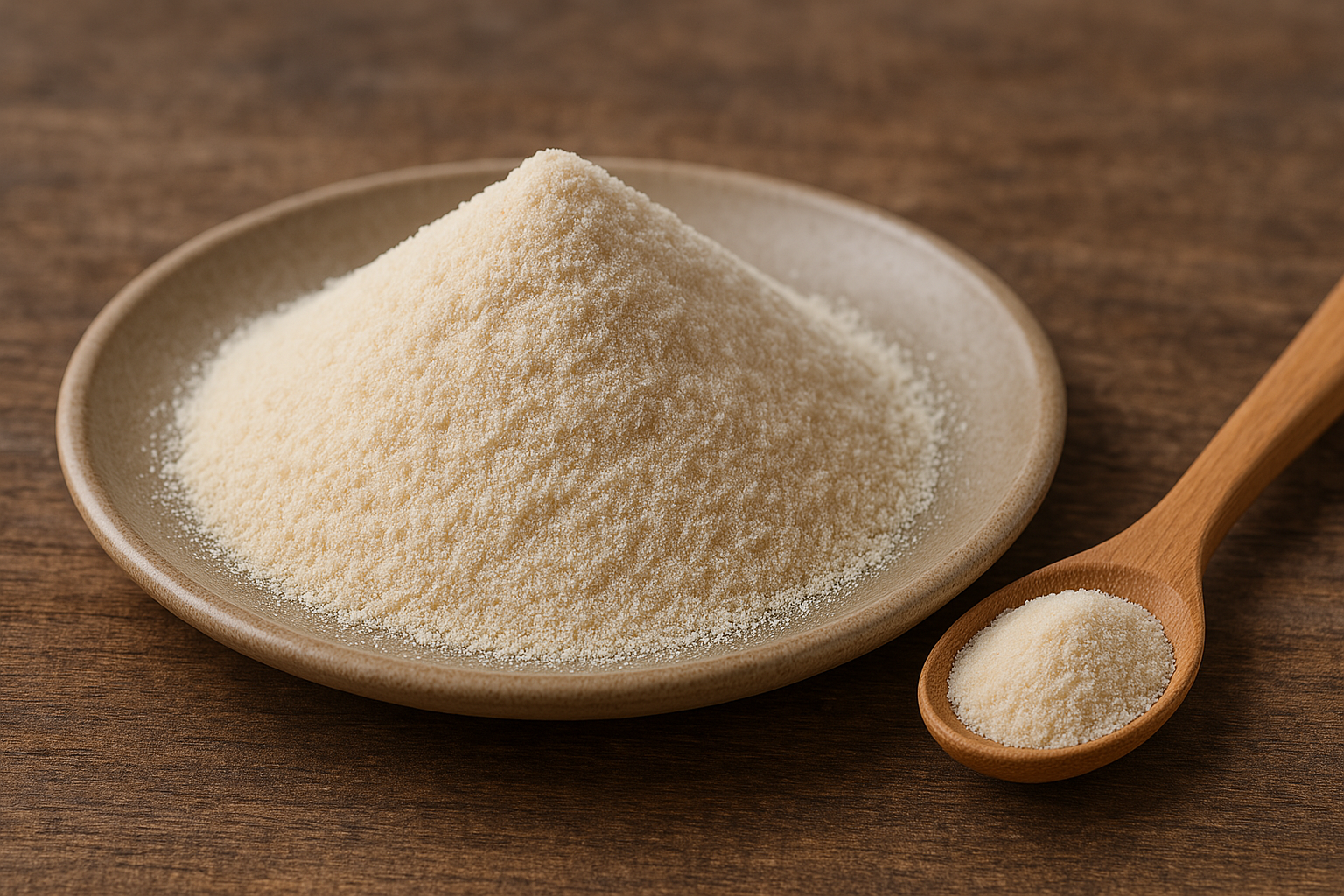
Historical Background: Agar Agar’s Journey Through Jewish Mediterranean Communities
The story of agar-agar in Jewish cuisine begins with the Sephardic communities that flourished along the Mediterranean coast following the expulsion from Spain in 1492. These communities, settling in places like Morocco, Tunisia, Turkey, and parts of Italy, developed distinctive culinary traditions that reflected both their Spanish-Jewish heritage and the influences of their new homes.
Historical records from the 16th century mention Jewish merchants trading in various sea products, including dried seaweeds used for culinary and medicinal purposes. Among these was a substance described as “sea gelatin,” which scholars now identify as early forms of agar-agar.
Rabbi Solomon ben Abraham Algazi, a prominent 17th-century rabbi from Smyrna (now Izmir, Turkey), wrote about the permissibility of this sea-derived substance for Passover, noting its importance in creating cold desserts during warm Mediterranean springs when traditional animal-based gelatin would be difficult to use.
Dr. Rachel Amado Bortnick, a historian specializing in Sephardic culture, explains: “The adoption of agar-agar represents the ingenuity of Jewish communities in adapting to both religious requirements and local resources. It’s a perfect example of how necessity drove culinary innovation in Jewish cooking.”
The Science Behind Agar-Agar: A Natural Wonder
To understand why agar-agar has been so valuable in Jewish cooking, we must appreciate its remarkable properties. Derived primarily from Gelidium and Gracilaria species of red algae, agar-agar consists of two polysaccharides: agarose and agaropectin. When dissolved in hot water and then cooled, these compounds form a stable gel structure that remains solid even at relatively high temperatures—a property that made it particularly valuable in warm Mediterranean climates.
Unlike animal-based gelatin, which begins to melt at around 95°F (35°C), agar-agar remains stable up to approximately 185°F (85°C).
Modern nutritional science has confirmed what traditional Jewish Mediterranean cooks seemed to intuitively understand—that agar-agar supports digestive health through its high fiber content and prebiotic properties.
Perhaps most importantly for Jewish dietary laws, agar-agar is inherently pareve—neither meat nor dairy—making it universally usable in kosher cooking regardless of the meal context. This versatility solved a significant challenge in kosher dessert preparation, creating sophisticated gelled sweets that could conclude any meal.
Traditional Jewish Mediterranean Recipes Featuring Agar-Agar
The historical recipe collections of Mediterranean Jewish communities reveal a surprising variety of dishes incorporating agar-agar—these range from simple fruit jellies to elaborate molded desserts showcasing Jewish cooks’ technical skill.
One of the most documented traditional preparations is “Menina,” a citrus-infused clear jelly popular among Turkish Sephardic Jews. Flavored with orange blossom water and sometimes layered with nuts or dried fruits, this refreshing dessert was particularly associated with breaking the fast after Yom Kippur, when light, easily digestible foods were preferred.
In the Jewish communities of Rhodes and other Greek islands, a dessert called “Megina de Alhashu” combined agar-agar with almond milk and rose water, creating a delicate white jelly often molded into intricate shapes for special occasions.
The community cookbook “Recipes from the Jewish Kitchens of Rhodes,” compiled in the early 20th century before the destruction of these communities in the Holocaust, contains several variations of this recipe, highlighting its cultural significance.
North African Jewish communities developed their own traditions. In Tunisia, “Muhallebi” often incorporated agar-agar rather than cornstarch as a setting agent, creating a firmer texture that could withstand the intense summer heat. Moroccan Jewish cooks created “Ktefa” variations to set layers of almond cream between thin pastry sheets.
What unites these diverse recipes is their ingenious use of agar-agar to create desserts that were not only permissible under kosher dietary laws but also practical for Mediterranean climates and celebrations. They represent a sophisticated understanding of this ingredient’s unique properties centuries before modern food science would codify this knowledge.
The 2025 Resurgence: Why Agar Agar is Trending Now
The renewed interest in agar-agar within Jewish cuisine is part of a broader culinary movement emphasizing sustainable, plant-based ingredients with historical significance. Several factors have converged to make 2025 a watershed year for this ancient ingredient’s revival.
First, the growing concern about environmental sustainability has elevated ingredients with minimal ecological impact. Agar-agar, harvested from rapidly renewable seaweed that requires no land, freshwater, or fertilizers to grow, represents one of the most environmentally friendly gelling agents available. As Jewish communities increasingly embrace eco-kashrut principles—extending traditional kosher considerations to include environmental ethics.
Second, the plant-based food movement has created demand for animal-free alternatives to common ingredients. With traditional gelatin derived from animal collagen, agar agar offers a completely plant-based substitute that actually predates the modern vegan movement by centuries within Jewish cooking traditions.
Third, the broader interest in fermentation and traditional food preservation techniques has led many culinary explorers back to ingredients like agar-agar, which were used historically before modern refrigeration and food technology. This “rediscovery” of traditional wisdom resonates particularly strongly within Jewish communities, where preserving culinary heritage carries cultural and religious significance.
Chef Yotam Ottolenghi, whose cookbooks have popularized many Middle Eastern and Mediterranean Jewish dishes, notes: “What’s fascinating about ingredients like agar-agar is that they’re simultaneously ancient and cutting-edge. Jewish Mediterranean cooks were using this sustainable, plant-based gelling agent centuries ago, and now we’re recognizing how forward-thinking that approach was.”
The National Restaurant Association’s “What’s Hot 2025 Culinary Forecast” specifically highlighted agar-agar as a trending ingredient, noting its particular resurgence in culturally specific applications, with Jewish Mediterranean cuisine leading this revival. Food sustainability expert Dr. Sarah Martinez observes that “agar-agar represents the kind of ingredient we need more of—environmentally responsible, culturally significant, and technically versatile.”
Modern Applications in Jewish Cooking
This revival takes several forms, from faithful recreations of historical recipes to creative new applications that maintain a connection to Jewish culinary heritage.
In Israel, chef Eyal Shani has incorporated agar-agar into modern interpretations of traditional Sephardic desserts at his acclaimed restaurant, North Abraxas. His “Deconstructed Menina” features clear citrus jellies made with agar-agar paired with contemporary techniques like citrus foams and candied citrus peels, creating a dish that honors tradition while embracing modernity.
Exploration of Sephardic and Mizrahi Culinary Traditions
In New York, the Jewish food revival movement has embraced agar-agar as part of a broader exploration of Sephardic and Mizrahi culinary traditions that were previously overshadowed by Ashkenazi cuisine in American Jewish food culture. Restaurants like Balaboosta and cooking schools such as the Center for Jewish Culinary Arts have introduced many American Jews to the possibilities of this traditional ingredient.
Home cooks are also rediscovering agar-agar through Jewish cooking blogs and social media. Popular Jewish food blogger Tori Avey notes that her agar-agar recipes receive significantly more engagement than they did even two years ago: “There’s a real hunger for ingredients that connect us to our heritage while also aligning with contemporary values like sustainability and plant-based eating.”
Beyond desserts, innovative applications include using agar-agar to create kosher “fish” stock for pareve versions of traditional fish soups, developing meat-free aspics for modern interpretations of Sephardic savory dishes, and creating sophisticated cocktail components for kosher mixology.
Rabbi Shmuel Herzfeld, who leads food justice initiatives through his Washington D.C. congregation, sees the agar agar revival as spiritually significant: “When we reclaim traditional ingredients like this, we’re not just cooking—we’re engaging in a form of culinary teshuvah, returning to sustainable practices that our ancestors understood intuitively.”
The Future of Agar Agar in Jewish Cuisine
As we look beyond 2025, the trajectory for agar-agar in Jewish cuisine appears strong. Several factors suggest this isn’t merely a passing trend but rather a meaningful reconnection with an important aspect of Jewish culinary heritage.
First, the alignment between agar-agar and contemporary values of sustainability, plant-based eating, and cultural authenticity positions it for continued relevance. Unlike trends based solely on novelty, its revival is grounded in substantive benefits and meaningful tradition.
Second, ongoing research into the health benefits of seaweed-derived products continues to validate traditional uses while discovering new applications. Recent studies suggest agar-agar may have prebiotic properties that support gut health, which is connected to a growing interest in the microbiome and digestive wellness.
Third, as climate change intensifies pressure on food systems, ingredients like agar-agar that can be produced with minimal environmental impact will likely become increasingly valuable. Jewish culinary traditions that already incorporate such ingredients may serve as important cultural resources for sustainable eating practices.
Food historian Joan Nathan, who has documented Jewish cooking traditions around the world, sees the agar-agar revival as part of a larger pattern: “Throughout history, Jewish cooks have been early adopters of ingredients that solve practical problems while respecting religious requirements. The rediscovery of agar-agar represents a continuation of that innovative spirit, connecting past wisdom to future needs.”
Conclusion
The resurgence of agar-agar in Jewish cuisine represents far more than a trendy ingredient having its moment. It embodies the reclamation of a sustainable tradition that connects contemporary values with centuries of Jewish Mediterranean culinary wisdom. As modern Jewish cooks rediscover this remarkable ingredient, they’re not simply following a food trend—they’re participating in the ongoing evolution of a living culinary tradition.
What makes this revival particularly meaningful is how perfectly it aligns ancient practice with contemporary needs. Long before sustainability became a buzzword, Jewish Mediterranean communities had incorporated this renewable, plant-based ingredient into their cooking traditions out of both necessity and ingenuity. In returning to agar-agar, today’s Jewish cooks are acknowledging that sometimes the most forward-thinking approach involves looking backward.
As we navigate the complex challenges of feeding ourselves sustainably in the 21st century, traditional ingredients like agar-agar remind us that our culinary heritage contains valuable wisdom waiting to be rediscovered. The ancient Jewish Mediterranean cooks who first incorporated sea-derived gelling agents into their kosher kitchens could hardly have imagined that their practical solution would one day be recognized as visionary—yet in 2025, that’s precisely what’s happening.
This connection between past and present, tradition and innovation, is what makes Jewish cuisine a living cultural expression rather than a museum piece. As agar-agar finds its place in contemporary Jewish kitchens, it carries with it centuries of history while opening new possibilities for sustainable, kosher cooking in the years to come.
Agar-agar is a plant-based gelatin made from red algae. It’s used to thicken or gel foods and is stable at high temperatures.
Yes. It’s naturally pareve (not meat or dairy), so it can be used in any kosher meal without mixing issues.
Yes. Sephardic Jewish communities around the Mediterranean used sea-derived gelling agents centuries ago—long before modern food science named it “agar-agar.”
Menina (citrus jelly from Turkish Jews)
Megina de Alhashu (almond milk jelly from Rhodes)
Muhallebi (North African milk pudding)
Ktefa (layered Moroccan dessert)
It’s high in fiber and acts as a prebiotic, which supports digestion. It also contains minerals like calcium and magnesium.
Frequently Asked Questions
What is agar-agar and how is it used in Jewish Mediterranean cuisine?
Agar-agar is a plant-based gelatin substitute derived from seaweed, commonly used in Jewish Mediterranean cuisine to create kosher-friendly desserts like puddings, jellies, and dairy-free treats, especially for those observing dietary laws.
Is agar-agar kosher for Passover?
Yes, agar-agar is generally considered kosher for Passover (when certified) because it's derived from seaweed and doesn't involve grains or legumes, making it a popular thickener in Passover desserts among Jewish Mediterranean communities.
Can I use agar-agar instead of gelatin in traditional Jewish desserts?
Absolutely! Agar-agar is an excellent vegan and kosher substitute for gelatin in Jewish desserts like p'tcha (jellied calves' foot) or fruit gels, though you'll need to adjust quantities as it sets firmer than gelatin.
What's the difference between agar-agar and regular gelatin in Sephardic cooking?
The main differences are that agar-agar is plant-based (making it pareve and kosher for meat meals), sets at room temperature, and creates a firmer texture than animal-derived gelatin, which is important in Sephardic dairy-free desserts.
How do I prepare agar-agar for Jewish vegetarian recipes?
To use agar-agar in Jewish vegetarian dishes: 1) Mix powder with liquid, 2) Bring to a boil while stirring (unlike gelatin which dissolves in cold), 3) Pour into molds. It sets in about an hour at room temp, perfect for Shabbat preparations.