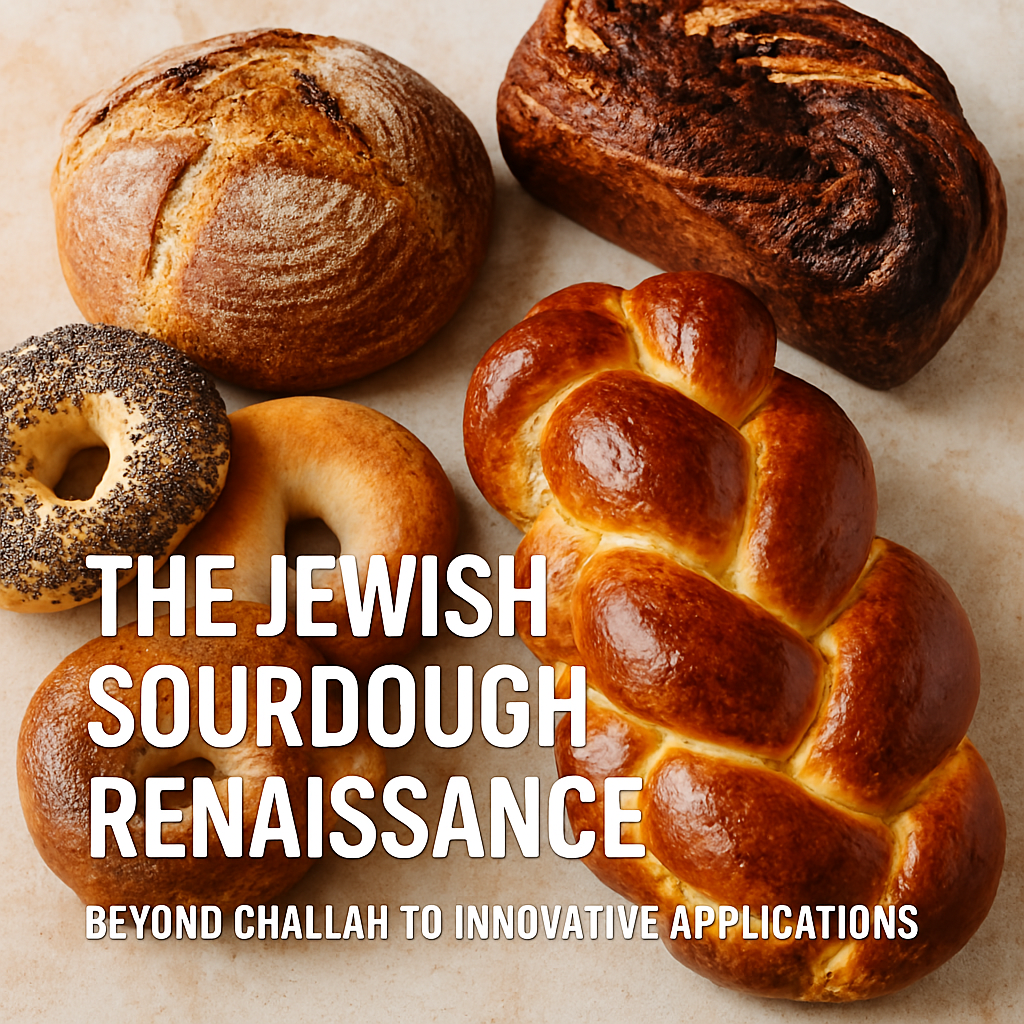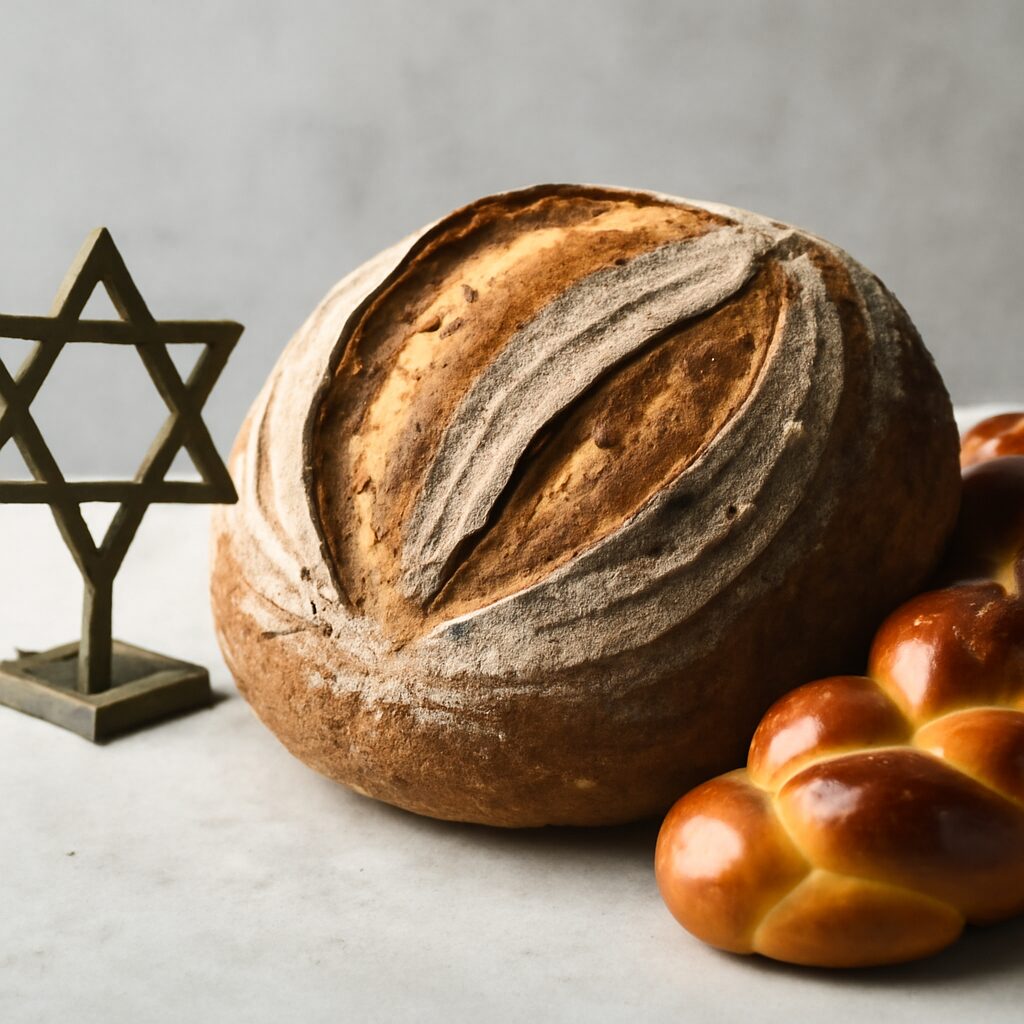
Sourdough has a long history in Jewish cuisine, dating back to ancient times when natural fermentation was a common method for baking bread. The process relies on wild yeast and bacteria, creating a distinct tangy flavor and chewy texture. Recently, there has been a renewed interest in traditional Jewish sourdough techniques, blending old-world methods with modern baking practices.
Lately, there’s been something kind of amazing happening in Jewish baking—sourdough is making a serious comeback.
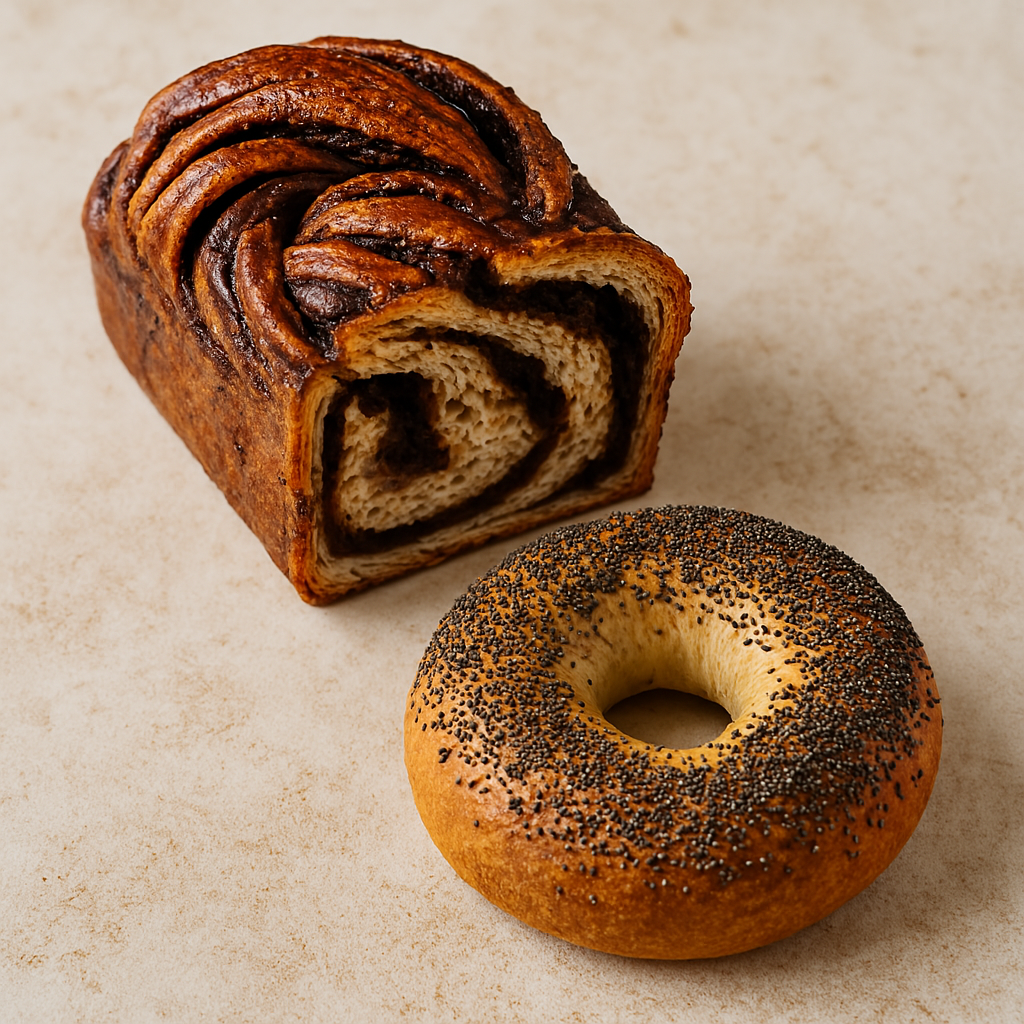
Now, sourdough isn’t new to Jewish kitchens. It’s actually ancient. But what’s different today is the burst of creativity. Bakers all over—from Brooklyn to Tel Aviv—are experimenting with these time-tested techniques, using them for everything from challah to babka and even bagels.
So yeah, this Jewish sourdough revival? It’s not just about making good bread—it’s about flavor, memory, community, and keeping something beautiful alive.
Sourdough in Jewish Baking History: Ancient Roots and Modern Revival
Fermentation in Ancient Israelite Culture
The relationship between Jewish communities and sourdough fermentation stretches back millennia, with evidence suggesting that the ancient Israelites, like other cultures in the region, relied on naturally fermented dough for their daily bread.
Archaeological findings from ancient Israel include bread ovens and storage vessels that would have been used in a baking process dependent on wild fermentation rather than commercial yeast, which wouldn’t be isolated until the 19th century.
Biblical Context and Chametz
Biblical references provide further evidence of sourdough’s historical importance.
The Hebrew term “chametz” refers to leavened bread made with fermented dough—precisely what would today be recognized as sourdough.
The prohibition against chametz during Passover specifically targets this naturally fermented bread, indicating its centrality in everyday life outside this festival period.
The biblical commandment to remove all leaven before Passover would have involved discarding sourdough starters maintained throughout the year.
Community and Se’or
Dr. Susan Weingarten, archaeologist and food historian specializing in ancient Jewish foodways, explains:
“What we now call ‘sourdough’ was simply ‘bread’ for ancient Jewish communities. They would have maintained starter cultures, known in Hebrew as ‘se’or,’ passing portions from batch to batch and likely between households. This practice created community bonds through shared bread cultures—quite literally.”
Diaspora and Regional Sourdough Traditions
As Jewish communities dispersed throughout the Mediterranean and beyond following the destruction of the Second Temple in 70 CE, they carried their bread-making traditions with them, adapting to local grains and conditions.
Different regional Jewish bread traditions emerged, all relying on natural fermentation techniques:
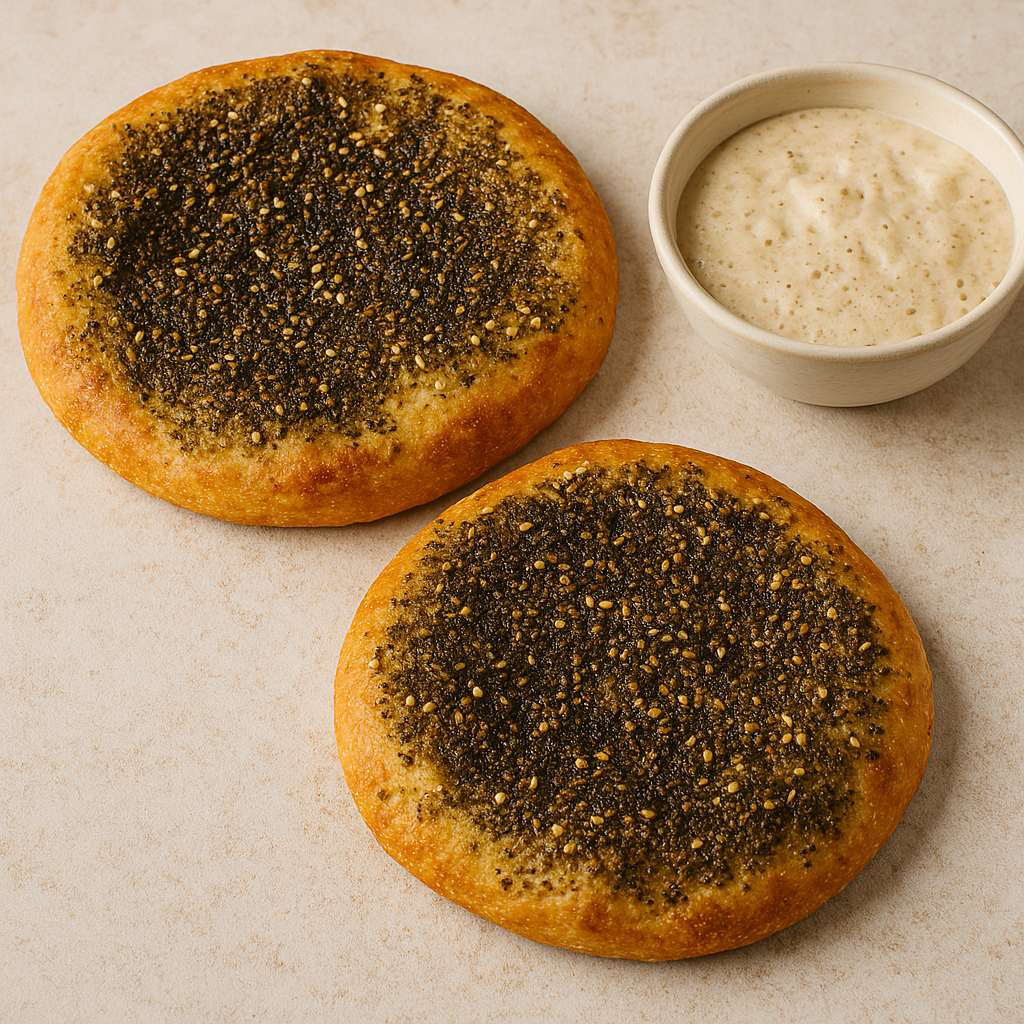
- Sephardic Communities: Distinctive flatbreads and leavened loaves, often incorporating olive oil and herbs
- Ashkenazi Communities: Dense, hearty rye breads well-suited to cool climates
- Middle Eastern and North African Jews: Flatbreads using ancient grains like emmer and spelt
The Changing Nature of Challah
Challah, the braided Sabbath bread, underwent significant transformation.
While traditional challah likely used some natural fermentation, by the mid-20th century, most recipes relied entirely on commercial yeast.
The Modern Sourdough Revival
The contemporary sourdough renaissance began as part of the artisanal bread movement in the late 20th century.
Pioneers like Nancy Silverton and Chad Robertson helped revive interest in sourdough, inspiring many Jewish bakers.
Books like:
- The Bread Baker’s Apprentice (2001)
- Bread by Jeffrey Hamelman (2004)
…helped bakers learn sourdough techniques.
COVID-19 and the Jewish Sourdough Boom
During the 2020-2021 pandemic, home baking surged.
Jewish home bakers started sourdough starters and shared their creations online—especially challahs, bagels, and other breads.
The Traditional Challah Connection: Sourdough Techniques in the Iconic Bread
Benefits of Sourdough Challah
- Flavor Complexity
- Better Texture and Shelf Life
- Digestibility
- Local Microbiome and Jewish Concept of “Place”
Diverse Styles of Sourdough Challah
- Ashkenazi-Style: Sweetened with honey or sugar, often with whole grain flour
- Sephardic-Influenced: Includes olive oil, anise, sesame, or orange blossom
- Whole Grain Versions: Spelt, emmer, einkorn
- Hybrid Leavening: Mix of sourdough and commercial yeast
Solving Technical Challenges
Bakers have developed methods to handle high sugar/fat content and complex braiding:
- Cold fermentation
- Adjusted hydration
- Modified braiding
- Timing strategies for Sabbath
Ritual and Symbolic Layers
The act of “taking challah” gains new meaning when the starter itself is a continuous link.
Rabbi Jonathan Sacks once noted that Jewish food rituals carry memory.
Sourdough challah, with its ongoing culture, does this in a literal way.
Frequently Asked Questions
What is Jewish sourdough bread?
Jewish sourdough bread refers to traditional Jewish breads like challah or rye that are made using a sourdough starter instead of commercial yeast, reviving ancient fermentation techniques for better flavor and digestibility.
Why is sourdough becoming popular in Jewish baking?
Sourdough is gaining popularity in Jewish baking due to its health benefits, deeper flavor profiles, and connection to traditional fermentation methods used before commercial yeast became widespread.
Can you make challah with sourdough starter?
Yes, you can make challah with sourdough starter by replacing the commercial yeast with an active sourdough starter, though it requires longer fermentation times and slight adjustments to the recipe.
What makes Jewish sourdough different from regular sourdough?
Jewish sourdough often incorporates traditional Jewish bread ingredients (like rye flour or honey) and follows specific Jewish baking customs, while maintaining the slow fermentation process characteristic of all sourdough.
How do I start making Jewish sourdough bread at home?
Begin by creating or acquiring a sourdough starter, then adapt traditional Jewish bread recipes by substituting yeast with starter and allowing for longer rise times. Many bakers start with sourdough challah or rye bread.